
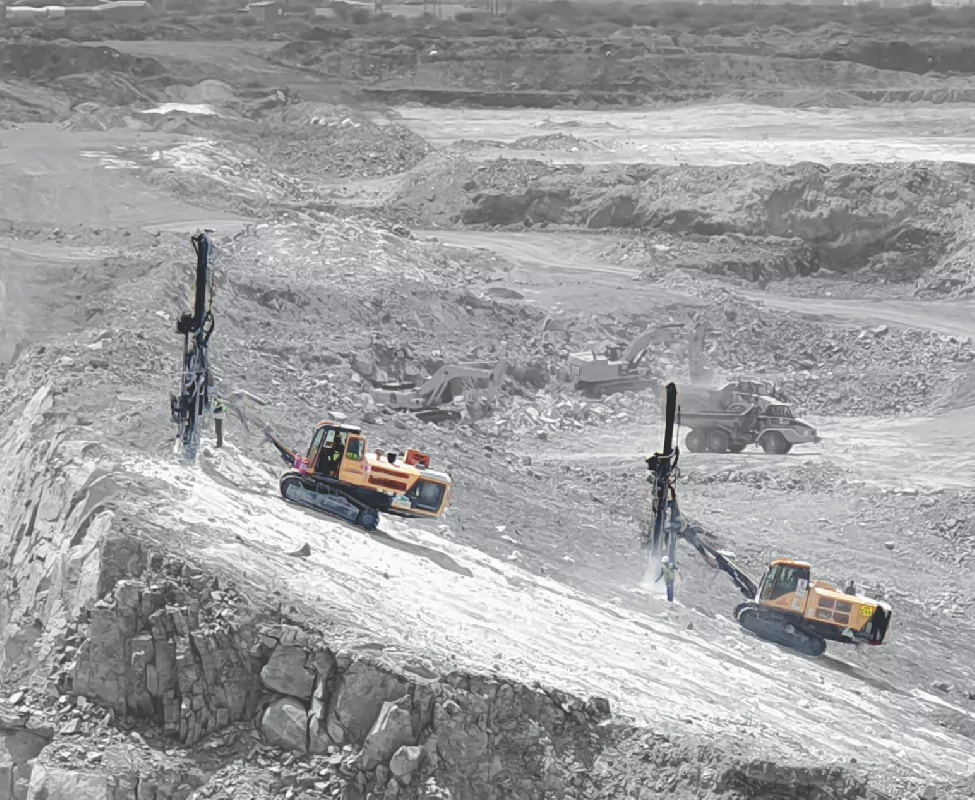
Seismograph monitoring is essential for the safety and credibility of any blasting operation. Using calibrated seismographs, we measure the ground vibrations and air blasts caused by drilling and blasting activities — helping clients maintain compliance with regulatory standards, protect surrounding assets, and answer third-party concerns with hard data instead of assurances.
Our team determines the optimal placement of instruments through detailed site assessment, ensuring accurate data collection at the points that matter: the nearest structures, the most sensitive receptors and the locations regulators care about. The data is then analysed to assess the real impact of each blast, supporting both day-to-day operations and long-term planning.

The Process, Step by Step
Accurate monitoring is a chain: placement, measurement, calibration and analysis. Break one link and the data is worthless — so we control all four.
Site Survey & Placement Plan
We assess the geological conditions and surrounding receptors to determine where monitoring matters most, and design a placement plan that satisfies environmental and safety regulations.
Deployment & Measurement
Calibrated seismographs are deployed to the planned positions to capture ground vibration and air blast readings for every event — accurately and consistently.
Analysis & Reporting
Readings are analysed against applicable limits and compiled into clear reports. Regular instrument calibration keeps every measurement defensible — in an audit or in a dispute.
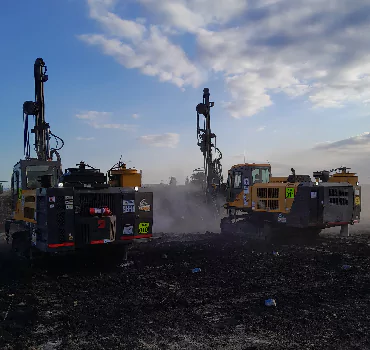

The Vibration Monitoring Equipment We Use
Our blast vibration monitoring equipment is built for drill-and-blast work: calibrated seismographs that pair a triaxial geophone — measuring ground vibration on three axes — with a microphone that captures air-overpressure (air blast). Every event is logged with its peak particle velocity (PPV) in mm/s, dominant frequency and air-blast level in decibels — the exact readings regulators, insurers and structural engineers ask for.
Instruments run in triggered or continuous recording mode to suit the operation, are time-stamped against the firing schedule, and stay on a documented calibration cycle so the data holds up under audit. Whether you need vibration monitoring equipment for a single production blast, ongoing monitoring across a mining campaign, or independent monitoring of another contractor's blasting near sensitive structures, we supply, place and manage it as a complete service.
Why Operations Trust Almin's Monitoring
Monitoring is only as good as the discipline behind it. Ours comes from running blasting operations ourselves:
Data That Stands Up to Scrutiny
Calibrated instruments, documented placement and per-event reporting give you evidence that holds in front of regulators, insurers and neighbouring communities.
Blasters' Insight, Not Just Numbers
Because we design and fire blasts ourselves, we read seismograph data the way a blaster does — and translate it into practical adjustments to charge weights and timing.
Standalone or Integrated
Monitor our blasts, your blasts or another contractor's — we provide the service independently or as part of a complete drill and blast package.
Protect your operation and your relationships with the people around it. Contact us today to set up seismograph monitoring for your project.
Need defensible blast data on your operation?
Tell us about your site and monitoring requirements — we'll propose a setup and an obligation-free quote.